The Dangote Refinery IPO: What Nigerian Investors Need to Know
by: I-INVEST
on: NOVEMBER 11, 2024
in: BLOG
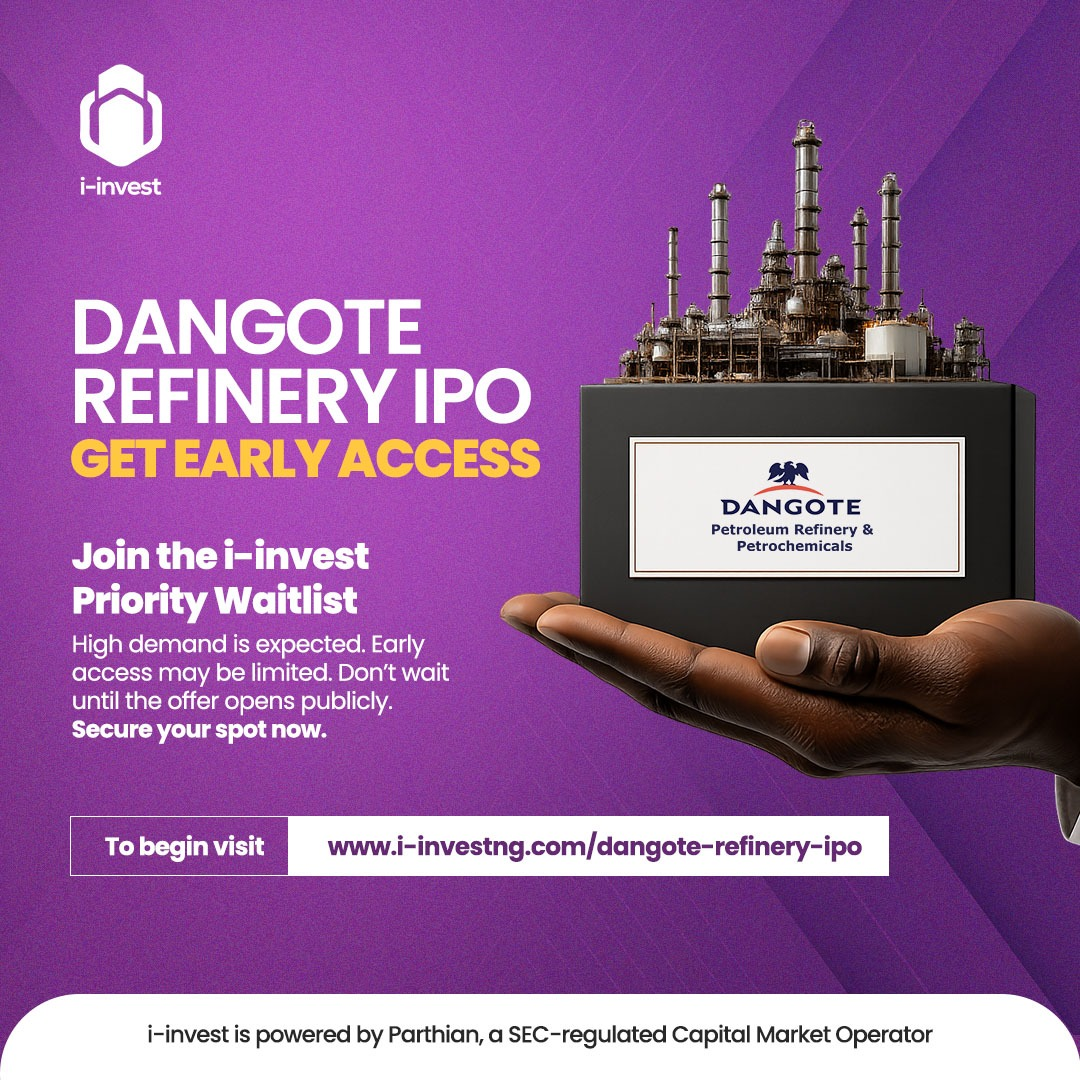
Africa’s largest industrial project is preparing to go public. Dangote Petroleum Refinery and Petrochemicals FZE, the $20 billion refining and petrochemicals complex located in the Lekki Free Trade Zone in Lagos, is expected to launch an initial public offering (IPO) in mid‑2026, potentially marking the largest equity listing in African capital‑market history.
Here is what differentiates this listing, why it matters for Nigerian retail investors, and what is confirmed versus still subject to regulatory approval.
A refinery built at unprecedented scale
The scale of the Dangote Refinery is already historically significant. The facility was officially commissioned in May 2023 and entered full commercial operations in early 2024. By February 2026, it had reached its full installed capacity of 650,000 barrels of crude oil per day, making it the largest single‑train refinery in the world and Africa’s largest refining facility.
Dangote Group has also publicly stated plans to expand capacity to 1.4 million barrels per day over the next three years, which if executed, would make the complex the world’s largest refinery by throughput. This expansion remains a strategic target, not yet completed.
What the IPO structure looks like
Dangote Industries Limited has confirmed plans to float between 5% and 10% of the refinery’s equity. Based on analyst and adviser estimates, the refinery is expected to debut at a valuation range of $40 billion to $50 billion, implying potential capital raised of up to $5 billion, depending on the final offer size and pricing.
For context, the total market capitalisation of the Nigerian Exchange (NGX) currently stands at approximately ₦200 trillion, equivalent to $65–70 billion using prevailing market exchange rates. A listing of this size would materially deepen liquidity and reshape the profile of the Nigerian equity market in a single transaction.
IPO timeline: what is confirmed
The IPO timeline now appears increasingly defined, though still subject to regulatory clearance:
- February 2026: Aliko Dangote publicly confirmed that Nigerians would be able to buy shares within four to five months, during a facility tour attended by NNPC leadership
- April 2026 (expected): Submission of the prospectus to Nigeria’s Securities and Exchange Commission (SEC)
- May 2026 (expected): Nationwide retail roadshow and electronic subscription launch
- June – July 2026 (target window): Listing on the NGX main board, with possible secondary African exchange listings later .
Until SEC approval is formally granted, these dates should be treated as management‑guided targets rather than guarantees.
The dollar‑dividend structure
A defining feature of the proposed IPO is its “naira‑in, dollar‑out” dividend option. Dangote has confirmed that shareholders who subscribe in naira will be able to elect to receive dividends denominated in U.S. dollars, an unprecedented structure in the Nigerian public equity market.
Management indicates that these dollar payouts would be supported by an estimated $6.4 billion in annual export revenues, primarily from refined petroleum products and petrochemicals such as polypropylene. While dividend levels are not yet disclosed, the foreign‑currency earnings profile provides a built‑in hedge against naira volatility, subject to actual operating cash flow and board approval.
Current ownership structure
NNPC Limited currently holds a 7.25% minority stake in the refinery, having reduced its originally planned ownership after failing to complete full payment for a larger allocation. This stake has been repeatedly confirmed by both Dangote Group and Nigerian policymakers and will remain in place alongside the IPO.
Dangote has described NNPC’s holding as being “on behalf of Nigerians” until broader public share ownership becomes possible through the market.
At the group level, Dangote Industries’ revenues have risen sharply in recent years, increasing from roughly $3.3 billion to about $18 billion over five years, while EBITDA (Earnings Before Interest, Taxes, Depreciation, and Amortization) has expanded from approximately $1.8 billion to $2.8 billion – figures often cited to contextualise the refinery’s investment case, though group performance and refinery performance remain distinct.
What this means for Nigerian retail investors
For retail investors, the Dangote Refinery IPO represents a rare opportunity to gain exposure to a large, export‑oriented industrial asset with foreign‑currency earnings at the point of listing.
However, listings of this scale typically move quickly. Once the SEC clears the prospectus, the subscription window is expected to be measured in weeks, not months. Investors who intend to participate will need:
- A funded NGX‑approved brokerage account
- An active CSCS account
- A clear investment budget and risk tolerance
These preparations should be completed before the formal offer opens, not after headlines break.